18 August 2005


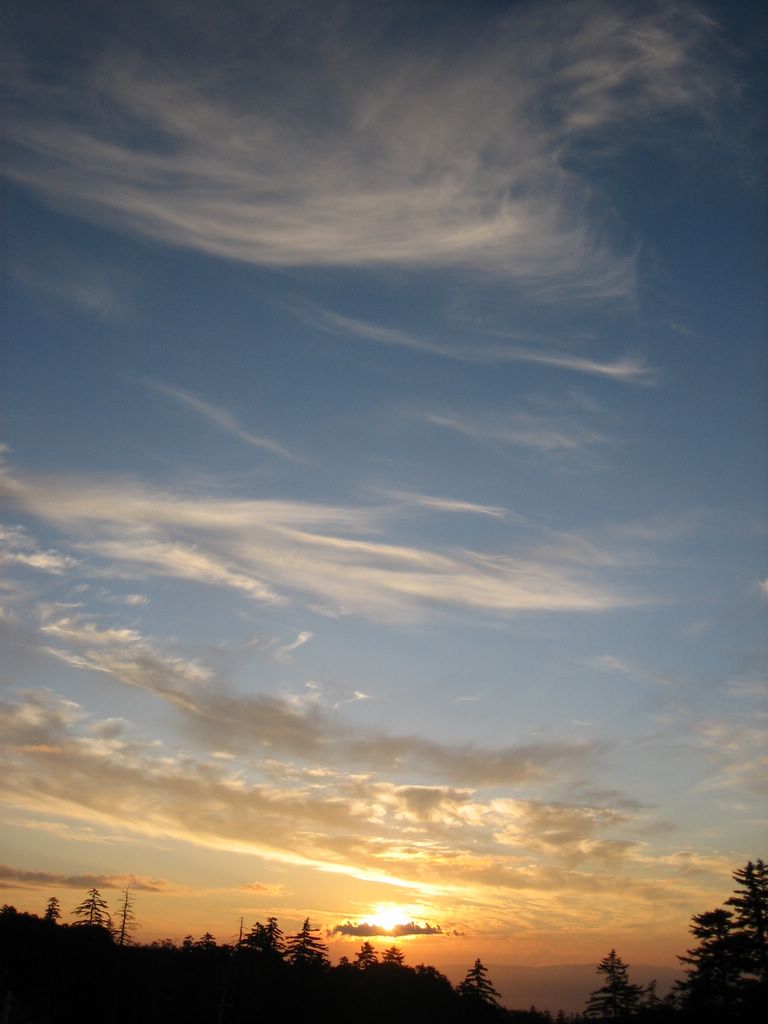
After a well-deserved dip in the onsen, we were treated to one of the most spectacular sunsets I've ever seen. Then, after a chilly night's sleep it was time to tackle the mountain...

Gary, Chris and Sam make their way up the volcano.

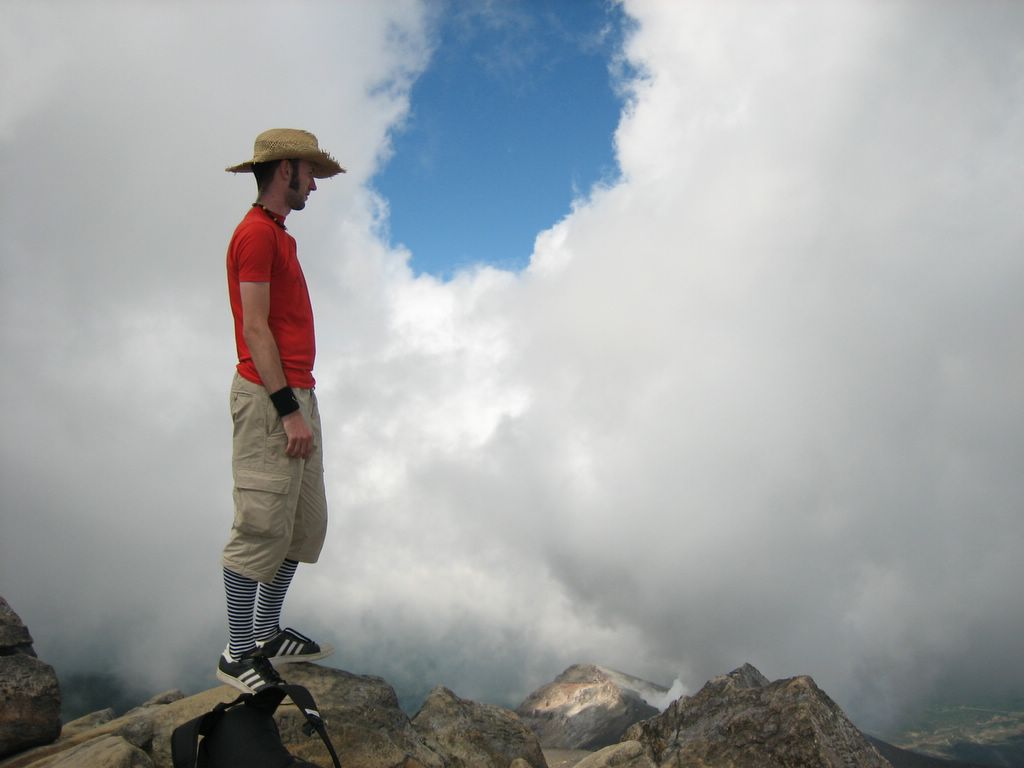
Here's me looking all moody and mysterious at the top of Tokachidake. In stripy socks.

And here's the active crater of the volcano, as seen from the peak. Potent rotten eggs smell not pictured.

As we made our way back down the mountain we walked along the crest of a ridge. One side looked like this: you could be forgiven for thinking you were in the Scottish Highlands...

...but on the other side the landscape looked more like a photo sent by the Mars Explorer. I think climbing the volcano was definitely the highlight of the trip - it was exhausting, but the views were worth it.

03 August 2005


A cicada on my bedroom window. Finger model's own.

Insects from Hell

Source: Webster's Revised Unabridged Dictionary (1913)

Cicada \Ci*ca"da\ (s[i^]*k[=a]"d[.a]), n.; pl. E. Cicadas
   (-d[.a]z), L. Cicad[ae] (-d[=e]). [L.] (Zo["o]l.)
   Any species of the genus Cicada. They are large hemipterous
   insects, with nearly transparent wings. The male makes a
   shrill sound by peculiar organs in the under side of the
   abdomen, consisting of a pair of stretched membranes, acted
   upon by powerful muscles.
 
"Shrill sound"? "Shrill sound"? More like the sound of a thousand deaf violinists trying to play a top E on a violin with strings made out of barbed wire. Seriously, these little buggers are driving me mad. I don't know if it's just me, but these intensely irritating insects seem to have gotten louder and louder over the past few days. Maybe it's because of the heat - the temperature reached 35 degrees yesterday, which I think was the hottest day of the year so far. Maybe the heat's getting them in the mood for love, and they're calling out to all the lady cicadas. Or maybe they're calling out for air conditioning. Either way, I wish they'd just shut up and let me get some sleep.

SHUT UP, SHUT UP, SHUT UP!!!!!!!!!

Luckily, the Japanese are one step ahead of the insect menace, as can be seen from this stylish and inexpensive Mosquito Headnet. Now if only they could make one with built-in ear defenders too...

02 August 2005


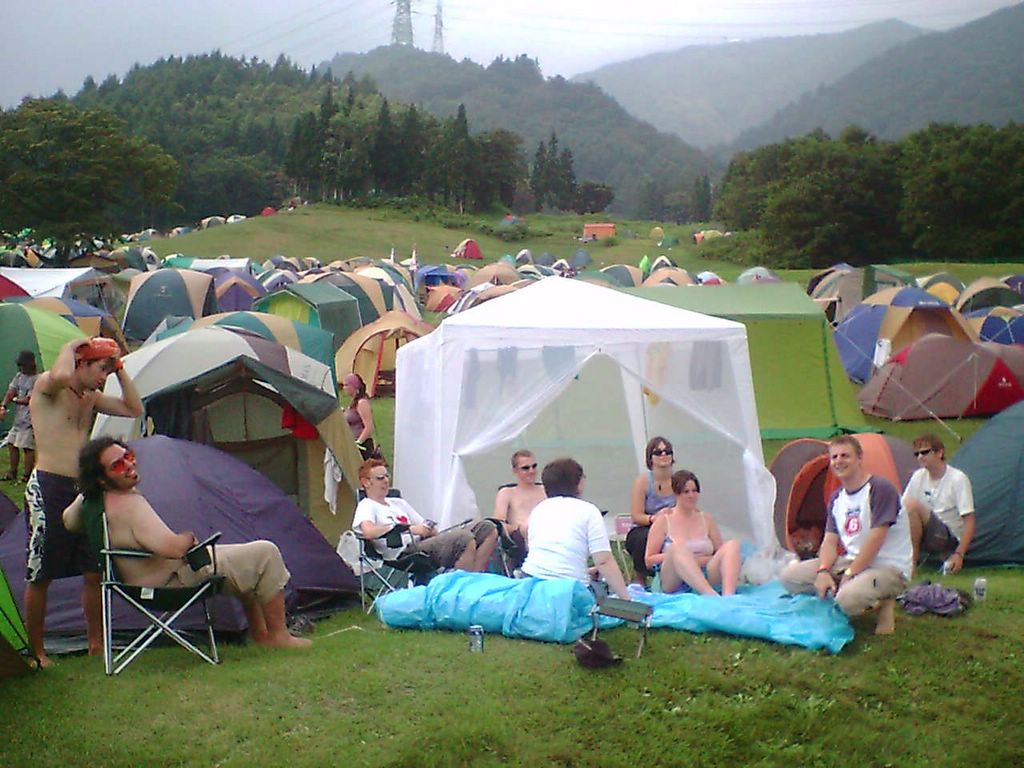
The crew settles in for a long, hard day of sitting in the campsite.

Fuji Rock

Wow. Just wow. I've just got back from the Fuji Rock Festival in
Niigata-ken, and I have to say I was thoroughly impressed. I wasn't
sure what to expect before I arrived, but it turned out to be very
similar to a UK festival - not surprising really, seeing as the
organisers modelled it directly after Glastonbury (it even had a Field
of Avalon). The setting was quite different though - Fuji Rock is held
at the Mt. Naeba ski resort way up in the mountains, which makes for
some stunning alpine views. The lack of open farmland was a bit of a
problem - the forests and narrow valley meant that the stages were
spread out in a long line, so walking from one stage to another took a
bit of time. It could be a bit annoying if the band you wanted to see
next was on a stage at the far end of the site, but luckily I managed
to solve the problem by spending most of the day drinking beer by my
tent, only emerging to watch the last couple of bands on the main
stage. That's lateral thinking for you.

Another result of the lack of open farmland was that the campsite was
actually a golf course. Which was a bit weird. "Hey, guys! You finally
got here! Come and find us, we're camped by the 9th green next to a
bunker! Wassat? No, I think it's a par 4...". Still, I wasn't
complaining - it was absolutely fantastic to see some real grass
again. Grass is one thing that I really miss here in Japan - it's so
hot where I live that grass has to be watered constantly to keep it
alive, so golf courses are pretty much the only places you see it. And
besides, there aren't any golf courses in Fukui (that I know of
anyway).

I couldn't believe they were actually letting people camp on a golf
course though - I really couldn't imagine anyone allowing that in
Britain. Usually after Glastonbury the campsite is a sea of empty
bottles and cans, and I've heard it takes a team of volunteers up to
three months to clear up. Not so at Fuji Rock - in true Japanese style
there was NO RUBBISH WHATSOEVER. People were even using pocket
ashtrays to take their cigarette butts with them. I have to say, I was
mightily impressed - I wonder if festival-goers in England could be
persuaded to do the same?

Anyway, it was a cracking weekend, and I could go on about it all day,
but I'm hungry and it's lunch time, so I'll end with my top five
specific moments of the festival, in no particular order:

1. Watching Dave Grohl jump off the stage, run through the middle of
the crowd, then climb the mixing tower in front of us during the Foo
Fighters gig. The man's a genius, someone give him a medal.

2. Persuading a group of Japanese people behind me to engage in an
impromptu bout of choral singing during Beck, followed by a spot of
impromptu robot dancing.

3. Riding up to the top of the mountain on the "Dragondala" and
discovering that the restaurant there had proper toilets.

4. Getting a bit carried away whilst watching Fat Boy Slim and taking
my top off in the rain. I know I have certain levels of English
decorum to maintain, but hey, it's a festival, I'm allowed.

5. Doing a bit of scally dancing to the sounds of those cheeky
chappies from Liverpool, The Coral. "Eh, eh! Calm down, calm down!!!"

Does anyone else have a top 5?


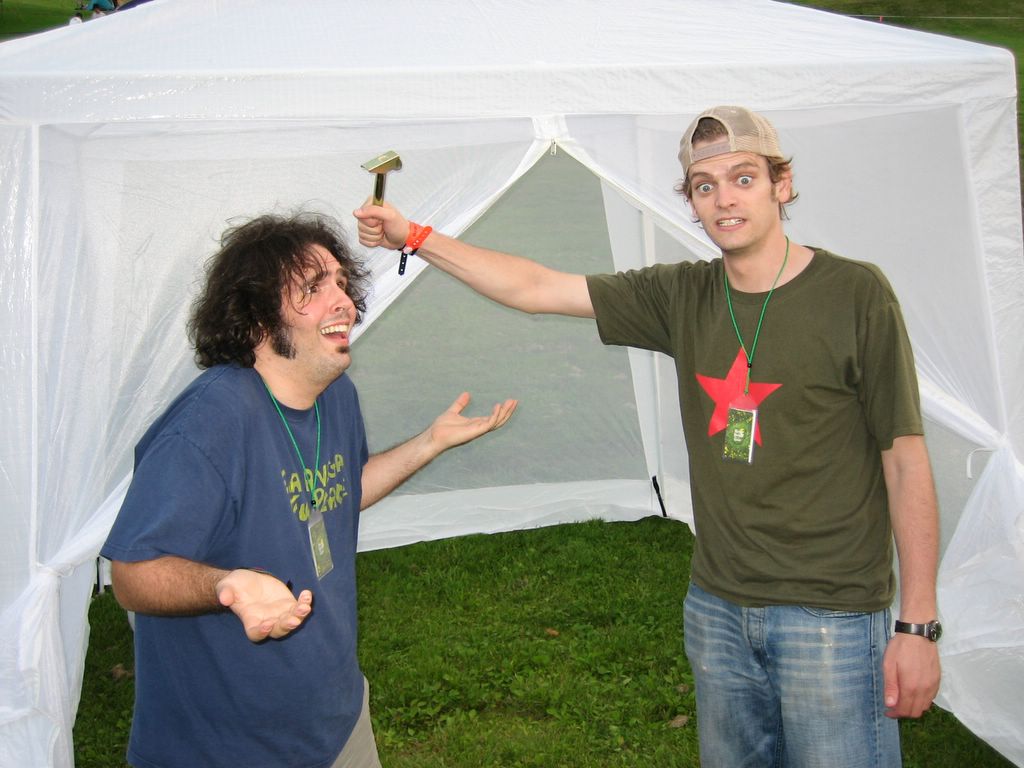
Jesse and Ruan were like a well-oiled machine when it came to setting up the gazebo.

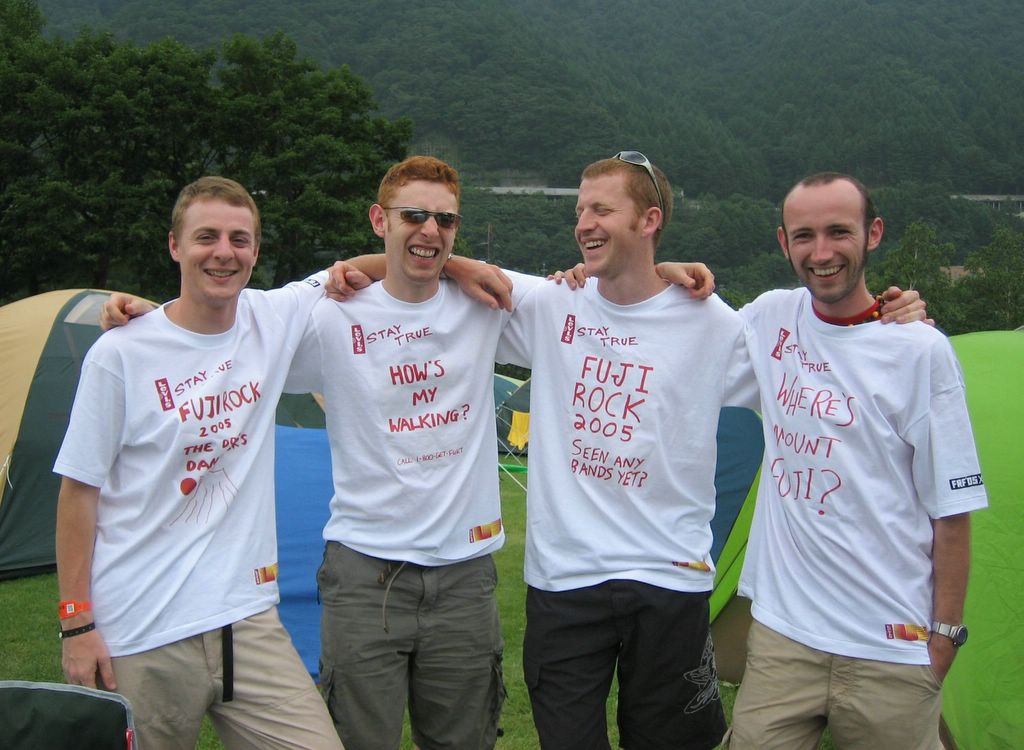
The Four Amigos - left to right, Sam, Gary, Chris and me. Note the fetching t-shirts - the Levi's stall was giving away free t-shirts that you could design yourself. Good work Mr Levi.

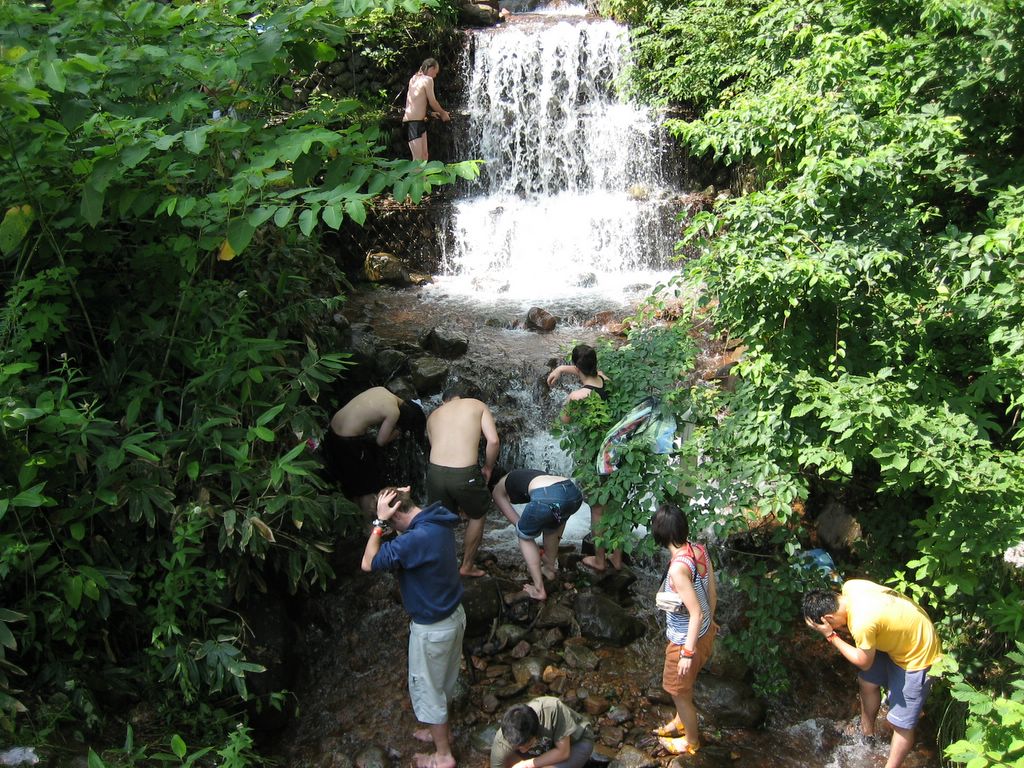
This freezing cold stream ran next to our campsite, and was an absolute lifesaver during the roasting-hot midday sun.

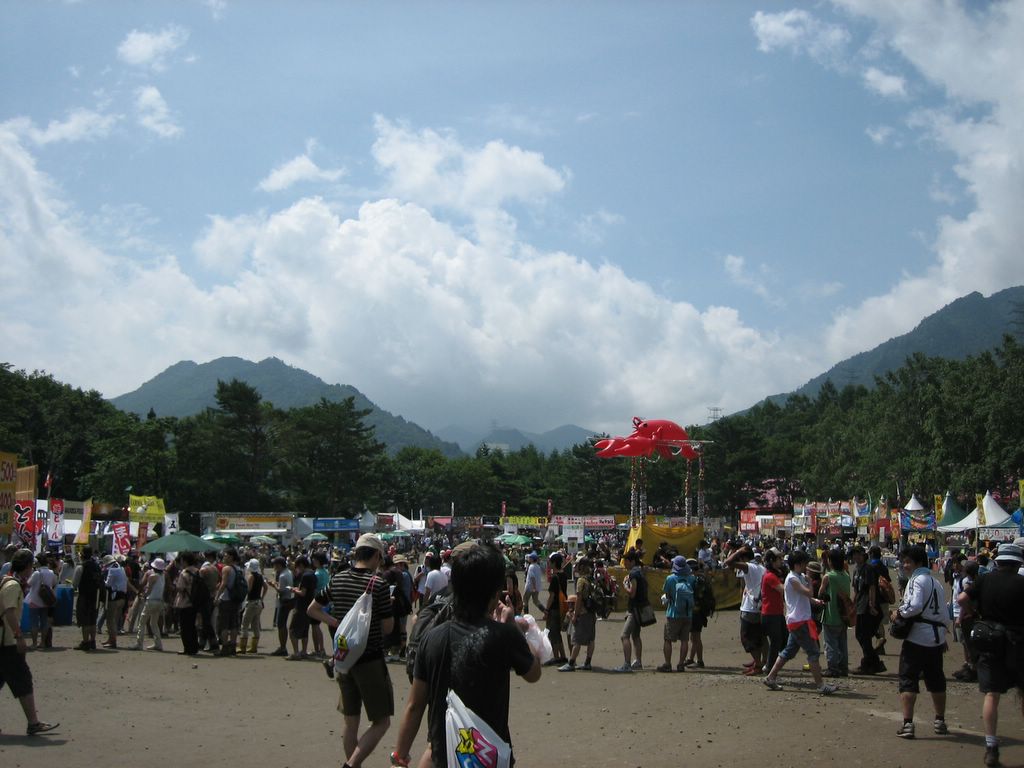
This is the main eating area - they even had a restaurant selling English breakfast and pints of Boddington's! I almost wept with joy. Note the mountains in every direction - it really was a beautiful setting for a festival.

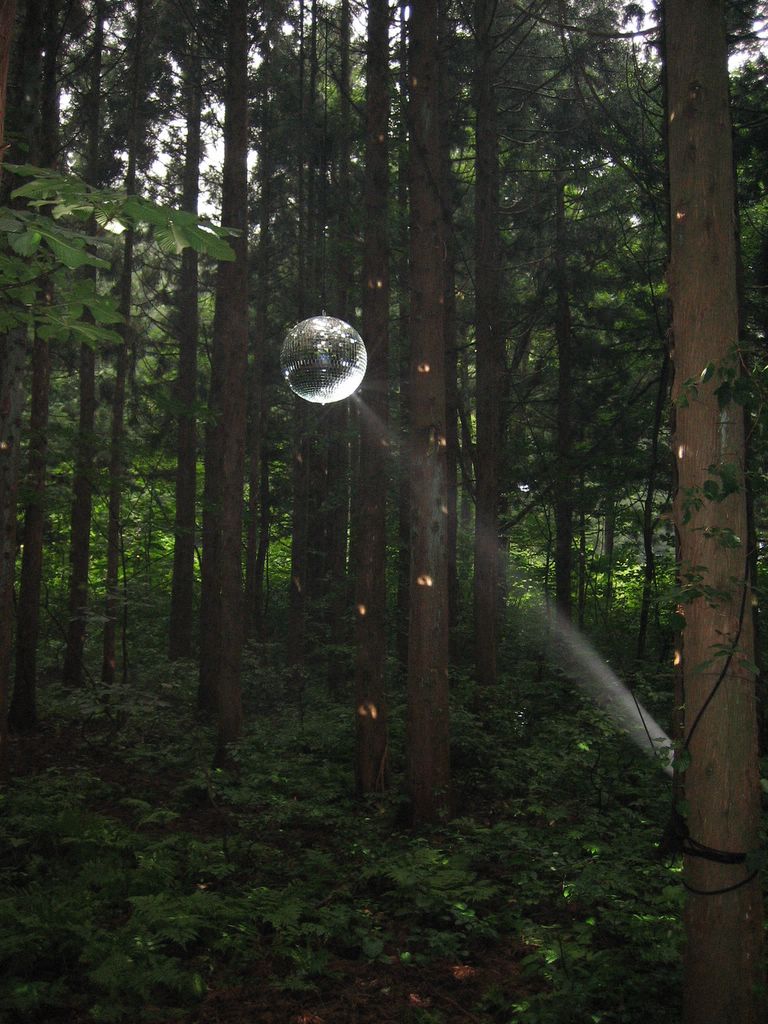
There was definitely a Glastonbury vibe to the whole festival, especially in the random installations scattered across the site, like this glitterball we saw in the forest.

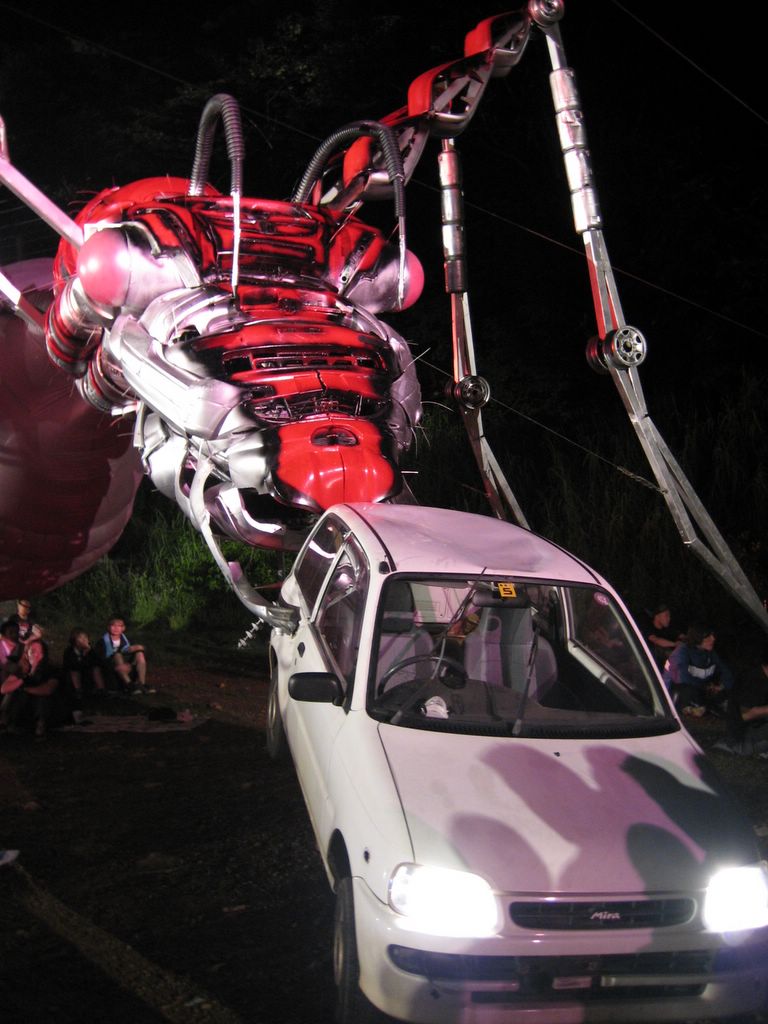
This fantastic ant sculpture was in a field called "The Palace of Wonder", which was full of crazy stuff like this. Michael Eavis would be proud.

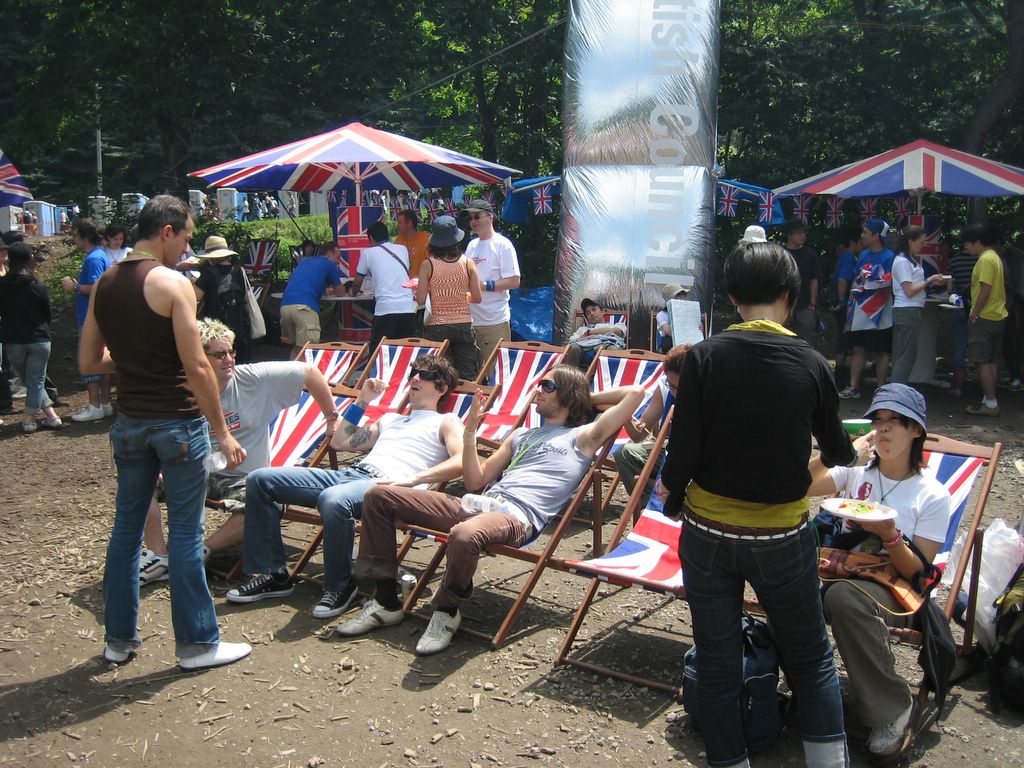
The British Council were on hand to introduce the Japanese festival-goers to the best that Britain has to offer - i.e. deckchairs. God Save The Queen.

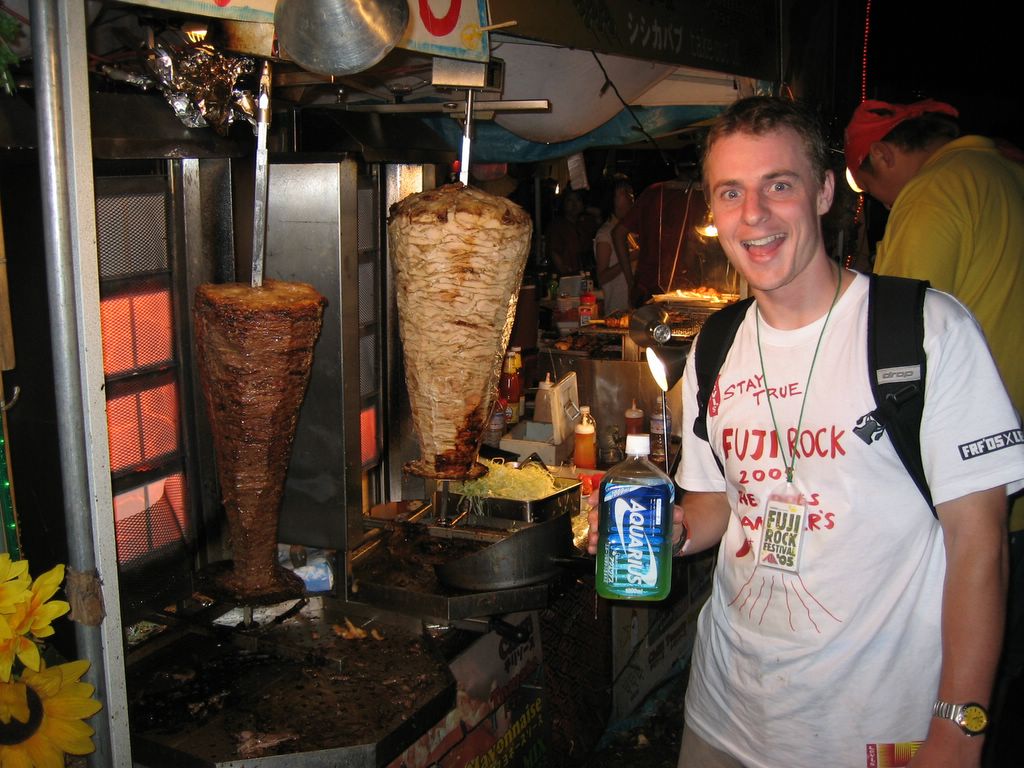
Then we stumbled across the kebab stall - the look on Sam's face says it all. After a year without the pleasure of eating reconstituted meat, Mr Baldwin had developed a serious case of kebab lust.

Kate gracefully displays one of the many insect friends we made over the weekend. There was certainly no shortage of these guys.

One of the highlights of the festival was taking a ride on the "Dragondola" - a cable car which takes you up to the main ski runs which get turned into a sort of chill-out area for the duration of the festival, akin to Glastonbury's stone circle (but without all the drug dealers). The cable car ride up there is just amazing... If you look closely at this picture you can just about see one of the festival stages tucked away in the valley.

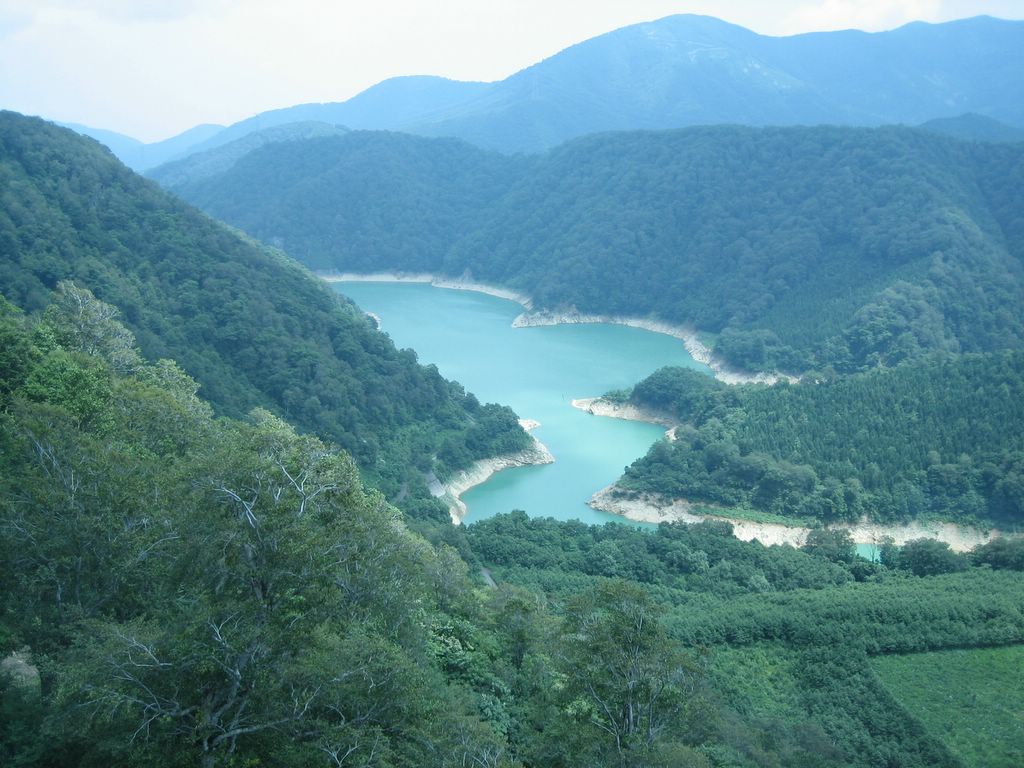
As we got higher, this stunning blue lake came into view...

And what did we find at the top of the mountain after this epic journey over giant ravines and azure lakes? That's right, a bear, a tiger, a panda, a mole and some hippy-looking guy with a guitar. The best band we saw all weekend.

All too soon Monday morning arrived, which meant it was time to take the tents down, swallow a couple of aspirin for the journey home and get the hell out of Dodge. Note the complete and utter lack of rubbish...

27 July 2005

The Rock is Calling...

I'm off to the Fuji Rock Festival in Niigata-ken tomorrow - I can't
believe the time has finally come. Let's rock, people. Hopefully in a
few days time I'll be able to post numerous photos of me standing
around in a field drinking warm beer with my top off and mud all over
my face. Ah, how I love festivals.

Anyway, just to warn you, the posts will be a bit sporadic throughout
August, since after Fuji Rock I'll be going on a road trip to
Hokkaido, then on the 19th my parents arrive (hello mum!, hello dad!),
so it's going to be a pretty hectic month. In the meantime though,
have a great summer everyone! School's out! Let's party!!!!

Oooh, I came over all American there. Sorry about that. Toodle-pip.

20 July 2005


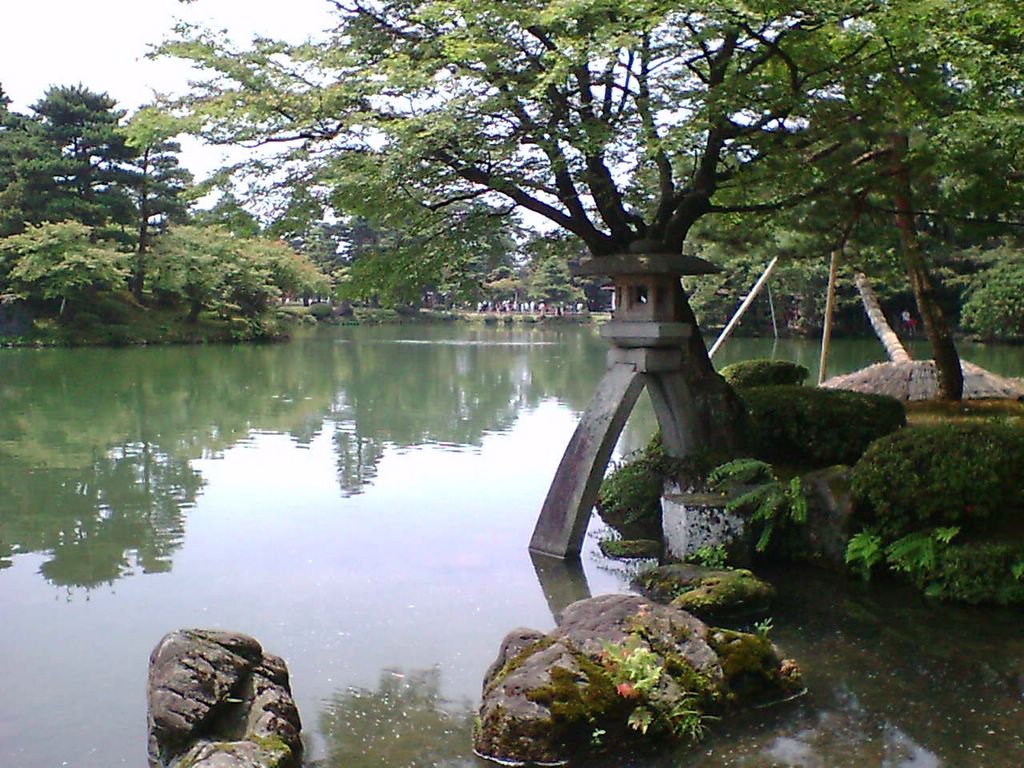
The famous "Kotoji lantern". Bothered.

Fake Plastic Trees

I spent most of the weekend in Kanazawa, which is in Ishikawa, just
north of Fukui prefecture. On Saturday we stayed the night at a
swimming pool/hotel complex called Renaiss (more on that another time)
and on Sunday morning a few of us headed out to Kenrokuen - one of
Japan's top three gardens. Here's the description from the Kanazawa
City tourist website:

"Kenrokuen is known as one of the three most beautiful gardens in
Japan. It is called Kenrokuen because it combines the six attributes
(kenroku) that a garden should have: spaciousness, seclusion, human
ingenuity, antiquity, water and panoramic views. It contains roughly
12,000 trees of 150 varieties, which achieve beautiful harmony with
the garden's meandering streams, ponds and bridges."

Of course, being one of Japan's top three gardens meant that it was
absolutely rammed to the gunwhales with tourists. Meandering around
the ponds and bridges often required dodging 30-strong tour groups,
all scrabbling to get into the best position to take THE photo you
MUST HAVE of Kenrokuen: the two-legged "Kotoji lantern" (see above).
The story goes that one of the two legs of the lantern was broken
during transportation, so the gardeners solved the problem by placing
the longer leg in the lake, and the shorter leg on land. In doing so,
they also created harmony between water and land, and added to the
essence of the garden.

Unfortunately, any harmony that may have been created by the lantern
has long since been destroyed by the throngs of amateur photographers
scrabbling to snatch a photo of the aforementioned landmark, of which
I was one. In hindsight, it would have made a much more interesting
photo if I'd turned the camera round and taken a photo of the jostling
crowd behind me...

I've been a bit negative so far about the garden, but that's not to
say I didn't enjoy looking round it - the gnarled old trees were often
very impressive and the little streams and teahouses all looked very
attractive. However, as I quoted above, one of the tenets of the
perfect garden is seclusion, and that was one thing which Kenrokuen
was definitely lacking - it's incredibly difficult to gain a sense of
"seclusion" when you're being followed round by a jabbering tour group
led by a tour guide screeching away through a megaphone in
hundred-miles-per-hour Japanese.

Aside from the tourists though, I felt there was something strangely
lacking in the garden... In fact, I often feel the same way in most
Japanese gardens. They always seem a little disappointing to me.
Perhaps its the lack of grass - usually the paths and trees are
surrounded by scrubby moss, which doesn't quite cover the ground and
gives you the impression that perhaps the garden isn't quite finished.
Or maybe it's the lack of colour - excepting the cherry blossom season
and the winter snows, the landscape is usually various uninspiring
shades of dark brown and green. The idea may be to inspire restful
thoughts, but well, let's be honest, it looks a bit drab.

However, I think my biggest problem with Japanese gardens though is
that they're constructed on a strictly "look, but don't touch" basis.
The winding paths carefully guide you around scenic rocks and streams,
but you're out of luck if you fancy taking your shoes off and lying
back underneath a tree. There's no freedom to explore: you have to
stick to the path.

Of course, in saying that I'm entirely missing the point of the
gardens, which is to inspire contemplation and a sense of beauty in
the viewer. But let's be honest, and it may be scandalous of me to say
this, but I'm gonna say it anyway: often they're not really that
interesting to look at. Give me St. James's Park in London any day.

The main lake of Kenrokuen.

Escaping trees are often a problem in Japanese gardens. Luckily this one has been tied down securely. You ain't goin' anywhere mate.

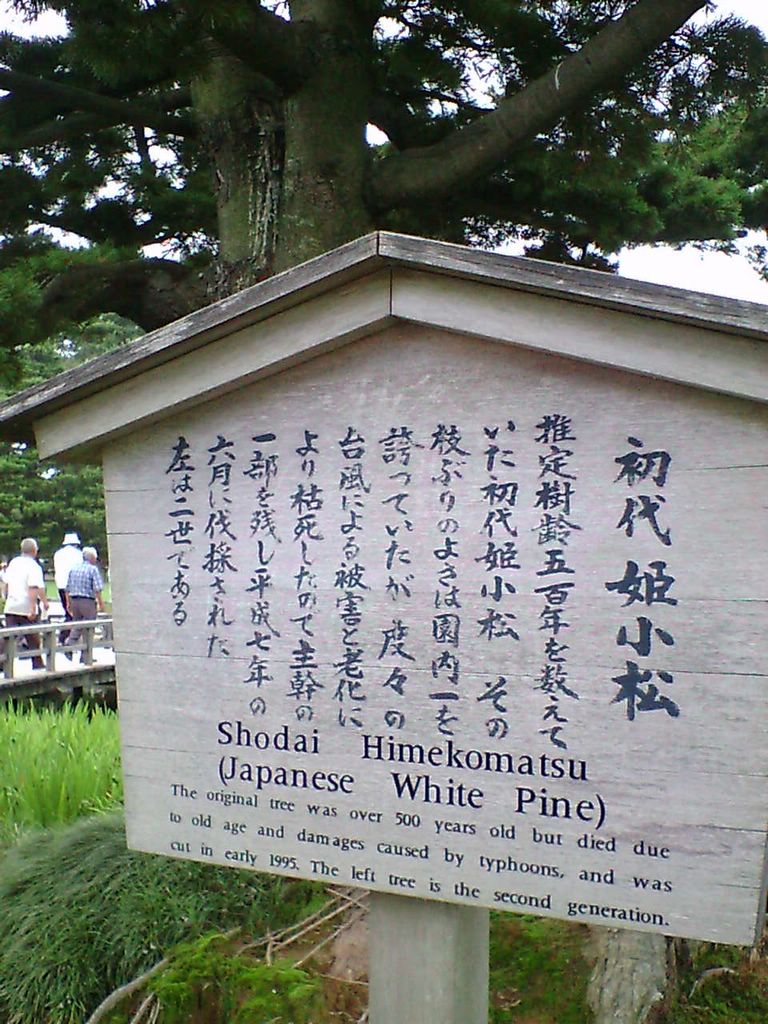
Kenrokuen is also home to this famous 500 year old white pine tree. Although it actually died in 1995.

Kanazawa castle. Although the castle dates from 1583, the original buildings were destroyed long ago. In fact, the castle has burnt down on numerous occasions in its long history, and this reconstruction was only completed in 2001 at a cost of ten billion yen. This time they built it with a sprinkler system.

According to Chris (second-year JET who will sadly be leaving us soon), the inside of the castle is full of flat-screen TVs with information for tourists and "smells a bit like Ikea".

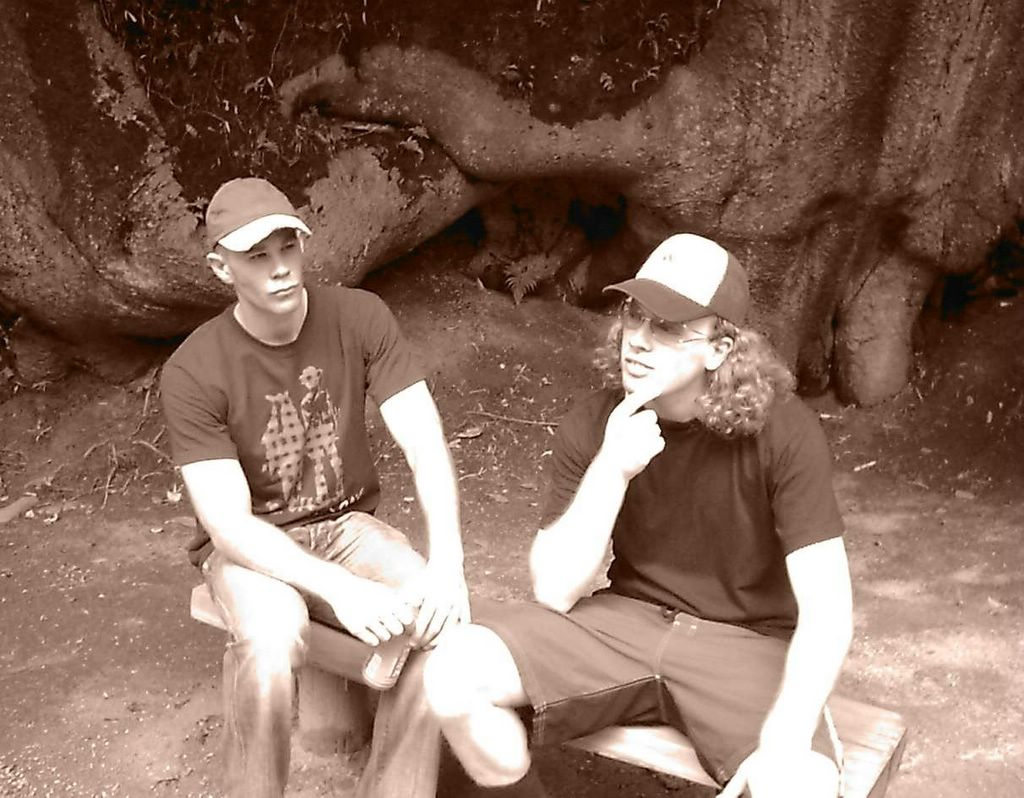
Two of Japan's greatest philosophers, Dave and Wade, ponder the meaning of it all in Kenrokuen.

19 July 2005

Local sights for local people

The month-long rainy season finally seems to be coming to an end, making way for day after day of humid, hazy 30 degree plus summer days. Thank God for air conditioning. Still, it would be a shame to spend the long days of summer trapped inside next to the A/C, so last Friday I took the opportunity to do a bit of exploring around my beloved adopted home town of Asahi, along with my partner in crime, the lovely Felicity.

Despite having lived in Asahi for nearly a year now there's still places I've yet to visit, one of which is a spooky little shrine barely ten minutes walk from my house, which goes by the name of Yasaka-jinja. I've cycled past it on many occasions, but for some reason I've never quite had the time to poke my head through the "torii" and have a look around. It's funny - I've been to the snow festival in Hokkaido and sunbathed on the beaches of Okinawa, and yet I still haven't properly looked round my own town...

I suppose part of the reason for that is the aforementioned stifling humidity and relentless heat - walking even the shortest distance in the Fukui summer means becoming unpleasantly drenched in your own sweat. The shrine may only be ten minutes walk away, but it's a long, soggy, shirt-wringing ten minutes of non-stop excretion. And I haven't even mentioned the fighter-squadrons of kamikaze mosquitoes.

The scenery more than makes up for the bodily unpleasantness though - the rice fields have just reached their most vibrant green, and the giant bird-sized dragonflies are busy whizzing around the roadside, intent on finding other bird-sized dragonflies in order to... well, make more bird-sized dragonflies. Which makes for a hell of a fly-by.

The shrine certainly wasn't disappointing either. I've written about how easy it is to develop shrine/temple fatigue in Japan - there's just so many of the damn things - but this one definitely had atmosphere on its side. Despite the fact that there were several people milling around dismantling the paper lanterns from the festival two days earlier, the shrine retained an eerie atmosphere of desertedness. The setting is no doubt a big part of this, since the sheer trunks of the surrounding cedar trees gave the whole place the look of a huge, naturally-created prison. Even in the middle of the day, it was quite easy to imagine untold eyes watching your every movement from behind the bars of tree trunks. The decaying walls of the shrine compiled the spooky feeling even further - if you've ever played a Biohazard game then you know these are exactly the kind of buildings that zombies just love to lurk in. In my mind I could just see the scenario... You walk up to the front door of the shrine. The bell rope is swaying slightly in the wind. You go forward to investigate and you're given a stark choice.

Pull the bell rope?

Yes No

Obviously you choose "yes" (does anyone actually ever choose "no" in those games?). Suddenly the temple door bursts open and five drooling zombies burst out.

"AAAAAAAAAAAAAAAAAAAHHHHHHHHH!!!!!! Equip shotgun!!! Equip shotgun!!!! Eat that!! Ha!!!! Aaaah! No ammo!! Get away from me!!! KNIFE! KNIFE! KNIFE! Die you mofo!! Ooops! No don't do that!! No! No! NOOOOOOOOOOOOOOO!!!!!!!!!!!!"

YOU ARE DEAD.

"Curses."

Hmmm. You know maybe I should stop playing so many computer games and get out a bit more...

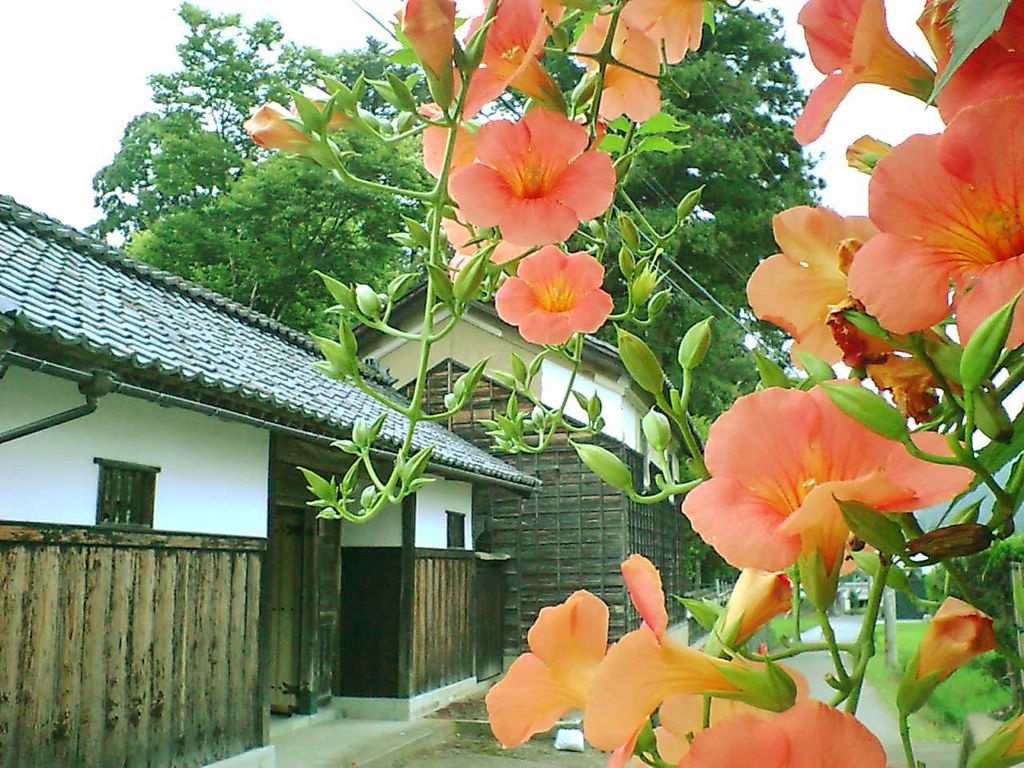
This is a traditional Japanese house about halfway down my road. I asked one of the Japanese teachers in the office what these flowers were called, but he had no idea. However, after enlisting the help of two other teachers, a plant encyclopedia and a phone call to the maths teacher's mother, we discovered that they're called "nouzenkazura" in Japanese. Although I still have no idea what they're called in English.

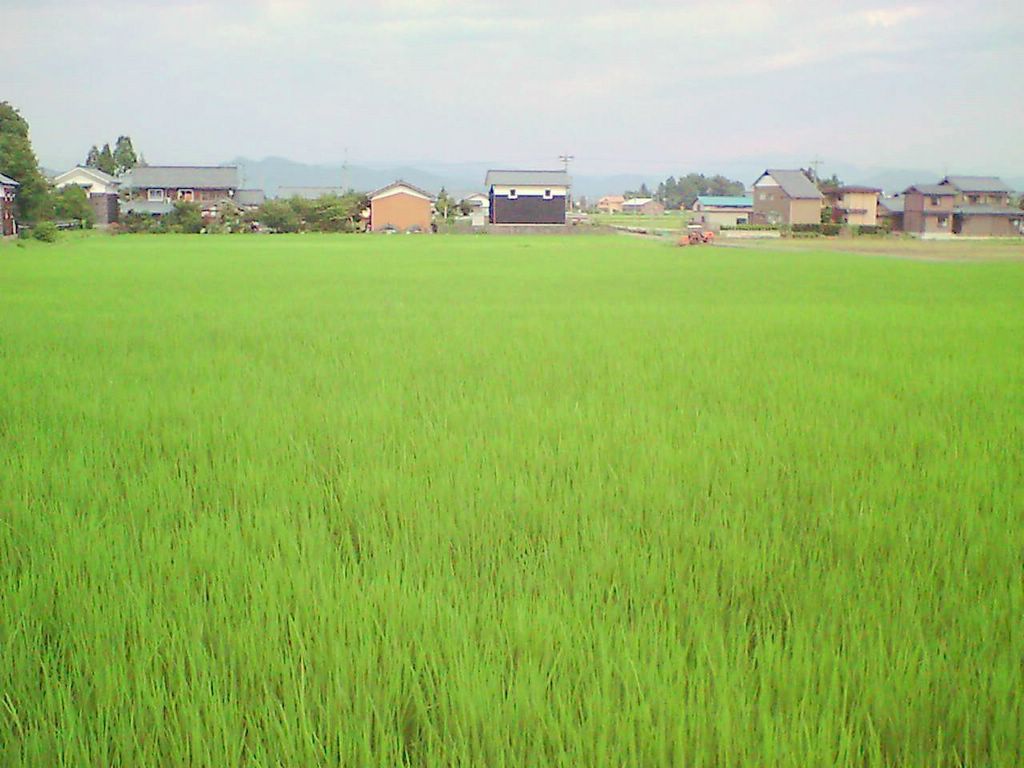
Asahi's looking very green at the moment - it's just a shame that you can't go and walk through the rice fields. All that greenery, but all of it totally off-limits...

The main gate leading up to Yasaka-jinja (jinja = shrine), which is about ten minutes walk from my house. The hydrangeas are out in full force.

Paper lanterns underneath the gate.

This is the main building - as you can see, it's totally enclosed by woodland. Prime zombie territory.

Another shot of Yasaka-jinja. The whole place had a very eerie, deserted feel about it... The rotting wooden struts and layer of leaf mould suggest that the shrine is abandoned, but the buzzing electric light bulbs and brand new slippers lined up outside the entrance tell you otherwise.

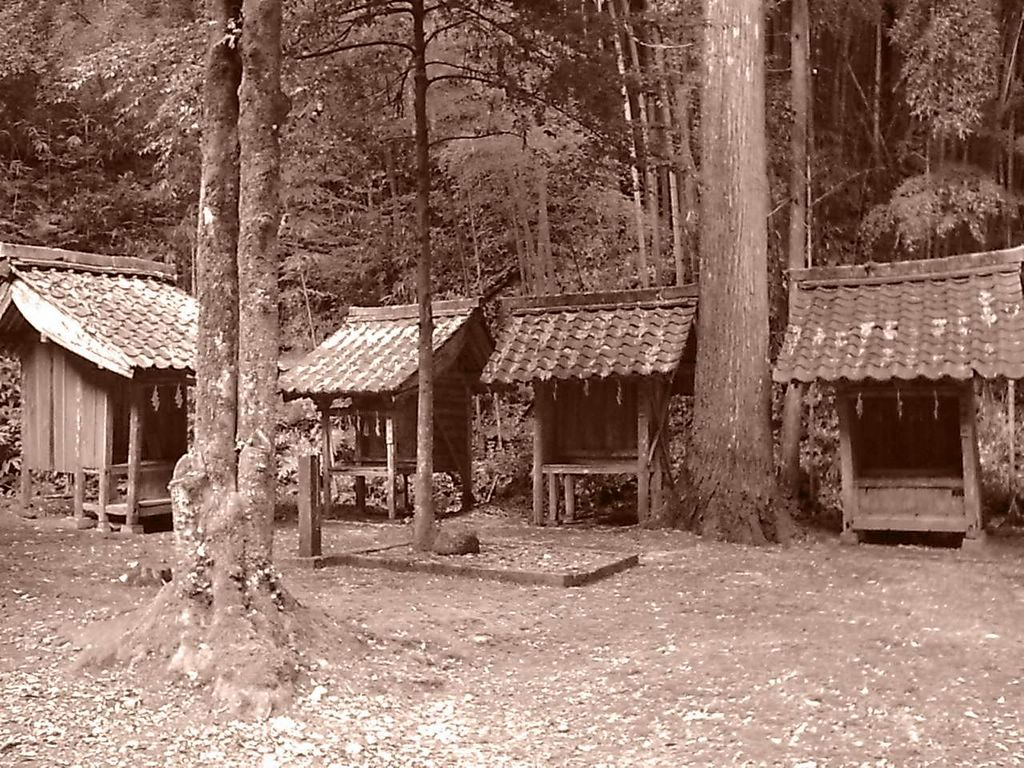
These are "hokora" - small shrines next to the main shrine ("jinja") which are dedicated to one minor god or spirit. In the Shinto religion everything has a spirit, so shrines like these can be dedicated to everything from a person, to a tree, to an animal, or even a rock.

More Hokora...

This is a map showing the area around Yasaka-jinja, which is the square in blue on its own at the top of the map. The houses in green are part of Housenji-ku (ku = community ward) and the houses in blue are part of Tenno-ku. As you can see, there isn't exactly a neat dividing line between them... I asked around to find out the reason for this, and it seems that it's mostly down to the division of rice fields - most of the families own a rice paddy, but the division of them is akin to medieval strip farming, with hundreds of narrow fields joined together like a giant agricultural jigsaw puzzle. This method of farming is part of the reason why Japanese rice is so expensive, and why the government has to spend millions and millions of yen each year subsidising inefficient, small-scale farmers. Having said that, it would be sad to see this kind of close-knit farming community disappear for the sake of efficiency and cheap rice...

13 July 2005

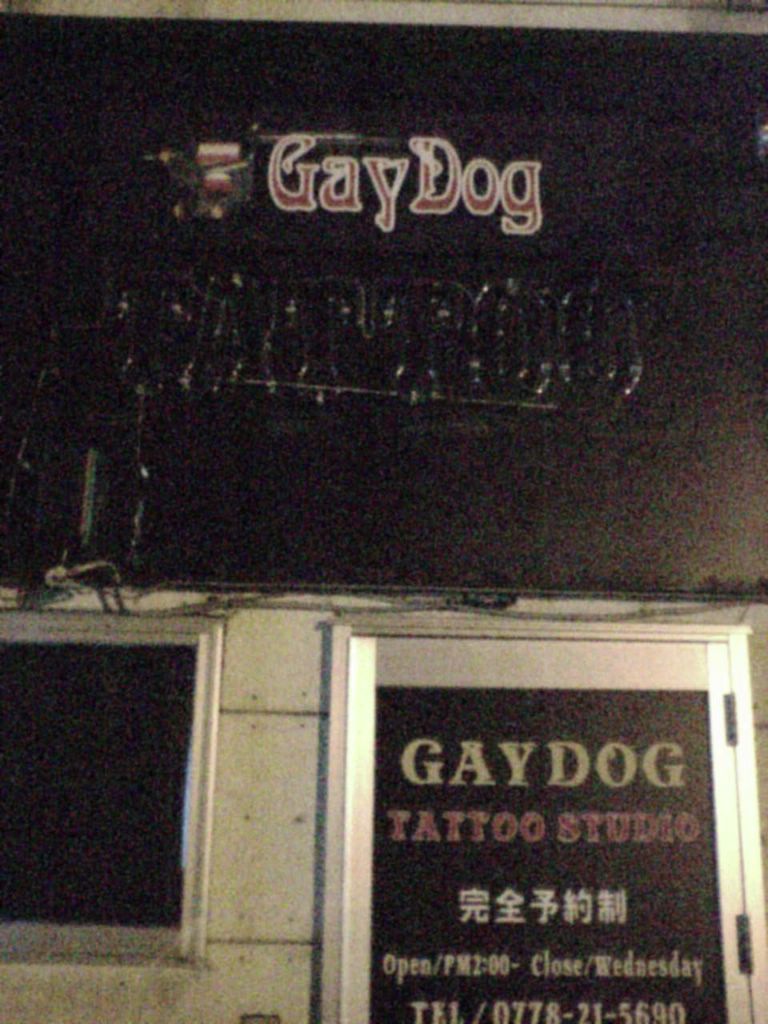
Gay Dog Tattoos

I spotted this tattoo parlour in the local "city" of Takefu. I don't know what to say about this picture really... "Gay Dog Tattoo Studio" - I mean, where on earth did they come up with that? Do they get episodes of South Park on Japanese TV? Are there really that many gay dogs that want a tattoo?

12 July 2005

The Sayonara Party

Has it really been a year already? It's all gone so quickly...

My first year on the JET programme is rapidly nearing its end, and the
time for goodbyes is upon us. I won't be leaving just yet (it was a
no-brainer to sign up for another year of Pocky and karaoke), but a
lot of the friends I've made over the past 12 months will be going in
what has quickly become a matter of days rather than weeks and months.
Scary.

Anyway, last Saturday was the big Sayonara Party for all the JETs who
are saying goodbye to Japan. It's probably the biggest event on the
Fukui JET calendar - buffet dinner for 80+ guests at a fancy
restaurant, followed by a bus ride to a nomihoudai (all-you-can-drink)
club night - and it was organised magnificently by our new Social
Secretaries Tilly and Laura: nice one girls. From what I gather, it
was all quite stressful to get the whole thing together - their hair
was (literally) coming out in clumps by the end of it.

I was expecting a pretty teary affair - lots of long goodbyes and
reminiscing about the past year - but in fact it was just a huge
piss-up. It's Tuesday now, and I'm still having trouble remembering
parts of the party... I remember having a hand towel fight with
Jesse... Pete shouted something like "10 points if you get 'im in the
face!!!", and then all hell broke loose.

That was during the two-hour nomihoudai at Versteck, but then a few of
us who could still stand decided to go on to another club called Lite.
It all gets very hazy from then on... I just about remember going into
the club: Nicky was having trouble walking in her heels, so I hoisted
her over my shoulder, stomped down the steps into the basement, swept
through the door, pointed at the barman with a big grin on my face and
shouted "NAMA ONEGAI!!!". God knows what he thought when he saw a
sweaty red-faced Englishman coming down the stairs with a girl in a
zebra-print dress over his shoulder.

The memories get patchy from then on... I don't even think I made it
to the dance floor... I do remember doing tequila shots with Ruan
though. Which is probably why I woke up in the gutter outside the club
at 3am.

The upshot of it all is that I didn't actually say a proper goodbye to
anyone, but maybe that's for the best. I mean, what's the point of
going through a long, emotional goodbye when you can just get really
drunk and pass out in a drain instead?

Anyway, thanks to everyone who' s been there for me over the past year
- you're all wonderful. Now, please enjoy the pictorial record of the
night displayed below. Yes, that's right, I took a grand total of 2
(count 'em) photographs. Memories I will treasure forever.


I vaguely remember this girl... mostly because she had a shiny gold face.

I think this is Neil's back. I'm guessing this was taken when we all started dancing to "Hot in Here" by Nelly... Yeah, that's right, Mitch and Neil had their shirts off - it's all coming back to me now! Wait a minute, I think I had my shirt off too. Oh Lord, what a sight that must have been... I think I threw it in Tilly's face when I took it off. Poor girl. Oh yeah, and Rob Brown took his shirt off too, but he kept his tie on. Classy guy.

11 July 2005

Native American Factory Hopi

There's a really bizarre little shop on the outskirts of Asahi. It's
called "Native American Factory Hopi", and I've been meaning to
investigate it further for the past year, but I've never quite gotten
round to it. I always drive past it on my way to the supermarket, and
I always think, "That's a weird name for a shop - I wonder what it
sells? And why is it stuck out here in the middle of nowhere,
surrounded by rice fields?". Then I always think, "Maybe I should stop
and take a look?", but that's always followed by, "Nah, I really have
to get this shopping home before the ice cream melts," or, "What if I
go inside and it turns out to be a cult headquarters and they make me
commit ritual suicide?"

Well, last week, on a rainy afternoon, I finally stopped there and had
a look. To my relief, it wasn't a cult headquarters, or even a factory
churning out Native Americans, it was actually just a shop selling odd
little trinkets of Native American origin, such as carvings, jewellery
and "dreamcatchers". So many dreamcatchers in fact that the ceiling
was positively sagging under the weight of all of them - there's
absolutely no way that any dream, good or bad, is getting in or out of
that shop.

So all very interesting, but it begs the important question - why? Is
there really such a big market for Native American knick-knacks in a
rural Japanese town of 9,000 people? Has the town been cursed to
suffer nightmares by a local witch, and is subsequently in desperate
need for dreamcatchers? Is there a local fashion trend for native
beads and head-dresses? It just doesn't seem to make sense that a shop
this specialised can survive in such a small town. I'm sure there's a
market for this kind of stuff somewhere, but I'm pretty sure it ain't
here: surely "Hopi" is the kind of shop you're more likely to find
sandwiched between the Chinese medicine stall and the keycutters in
the depths of an American shopping mall...

I mean, it makes little sense that Asahi has a shop specialising in
Native American cultural artifacts when the total number of shops in
the whole town barely makes it into double figures. There aren't even
any bars, unless you count "Bar New Friend" which only sells whisky
and has an exclusive clientele of 70 year old karaoke singing farmers.

Still, I have a strange fondness for "Native American Factory Hopi".

It's odd. And I like that.


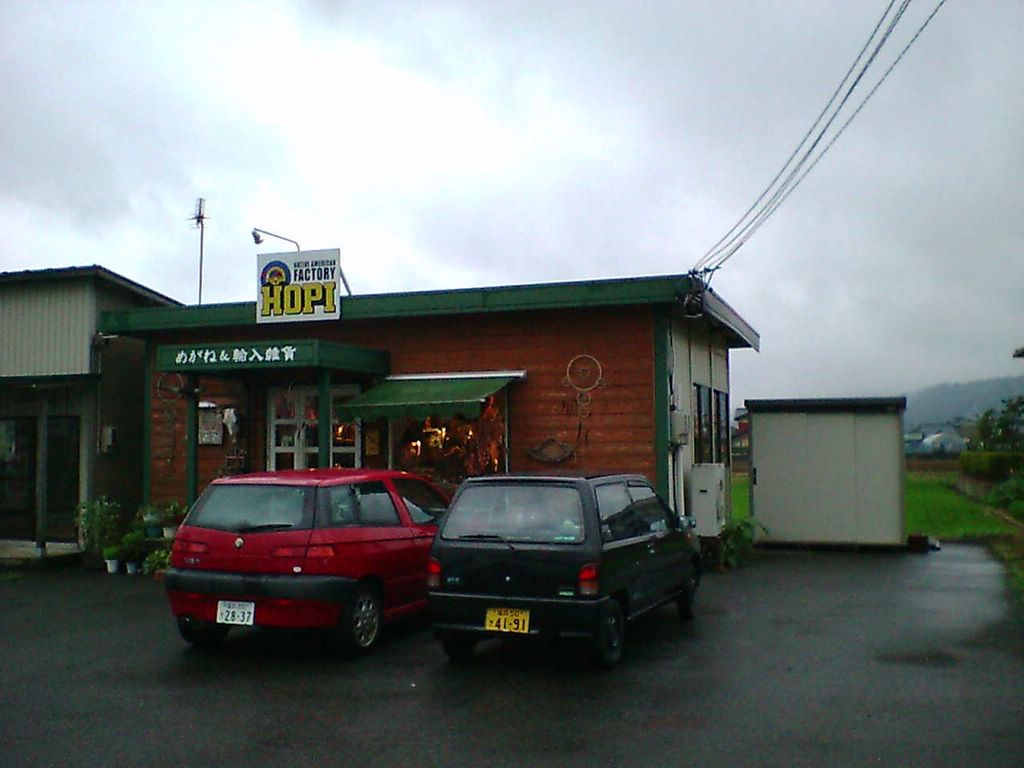
"Native American Factory HOPI". Note the two cars in the car park - this is the busiest I've ever seen it. Although the car on the right is mine and the other one belongs to the owner.

08 July 2005

The London Bombings

I found out about the London bombings last night, and there ensued an awful hour of panic where I found myself frantically calling everyone I knew in London to make sure they were safe. I was at an English summer camp for senior high school students when someone sent a text message with the news, and all the English teachers rushed to the nearest TV to find out what exactly had happened. It was so frustrating to see all these horrific pictures of mangled buses and the walking wounded, but being totally unable to understand any of the Japanese commentary. To make matters worse, my mobile phone chose that moment to run out of batteries, so I had to rush home to use my landline to call everyone. It took a while to get through the overloaded phone networks, but eventually I found out my friends and family were safe.

I still can't quite take in what has happened. Suddenly I feel so far away from home...

I'm just angry at the moment. I don't normally agree with anything written in The Daily Star, but for once I totally agree with their headline. It sums up what I'm feeling perfectly.

BASTARDS.

06 July 2005

The English Tea Ceremony

Last weekend Sam (thefunkydrummer) and I finally finished putting together JETfuel, which is the magazine distributed to the hundred or so JETs in Fukui prefecture. Sam and I took up the position of editors last month, so this was our first issue together, and I think I can speak for both of us when I say that it was a damn sight harder to put it all together than we thought it would be.

Actually getting people to write stuff for the magazine was surprisingly easy (in fact we had to add in another four pages because we had so much stuff), but formatting the beast turned into a bit of an Olympian task. Both of us have spent the past week glued to our computer screens, jiggling around text boxes and fiddling with fonts until the cows came home, and then on Friday night we were up into the wee small hours trying to compile all the articles together, checking for errors, deciding page layout yada yada yada.

Anyway, we're both pretty pleased with the result, and I've had some positive feedback, so hopefully it's all worth it. At the moment we're trying to find a way to put the whole thing online, but that's unlikely to happen before the next issue in September (although some of the old issues are online here). In the meantime though, I thought I'd post an article I wrote called "The English Tea Ceremony". I've been getting a bit annoyed at the amount of press that the Japanese tea ceremony gets over here, so I thought I'd restore the balance with a celebration of a very English tradition.

fig. 1 - The English Tea Ceremony is usually performed first thing in the morning, and often follows another one of England's noble and historic rites: "The Getting Pissed Down The Pub With Your Mates Ceremony". First, it is of the utmost importance that the English tea student enters the ceremony room in the correct manner. The left hand should be the first part of the body to cross the threshold, clutching the door jamb tightly for support. At this point the tea student also has the option of using his/her right hand to lightly massage the temples.

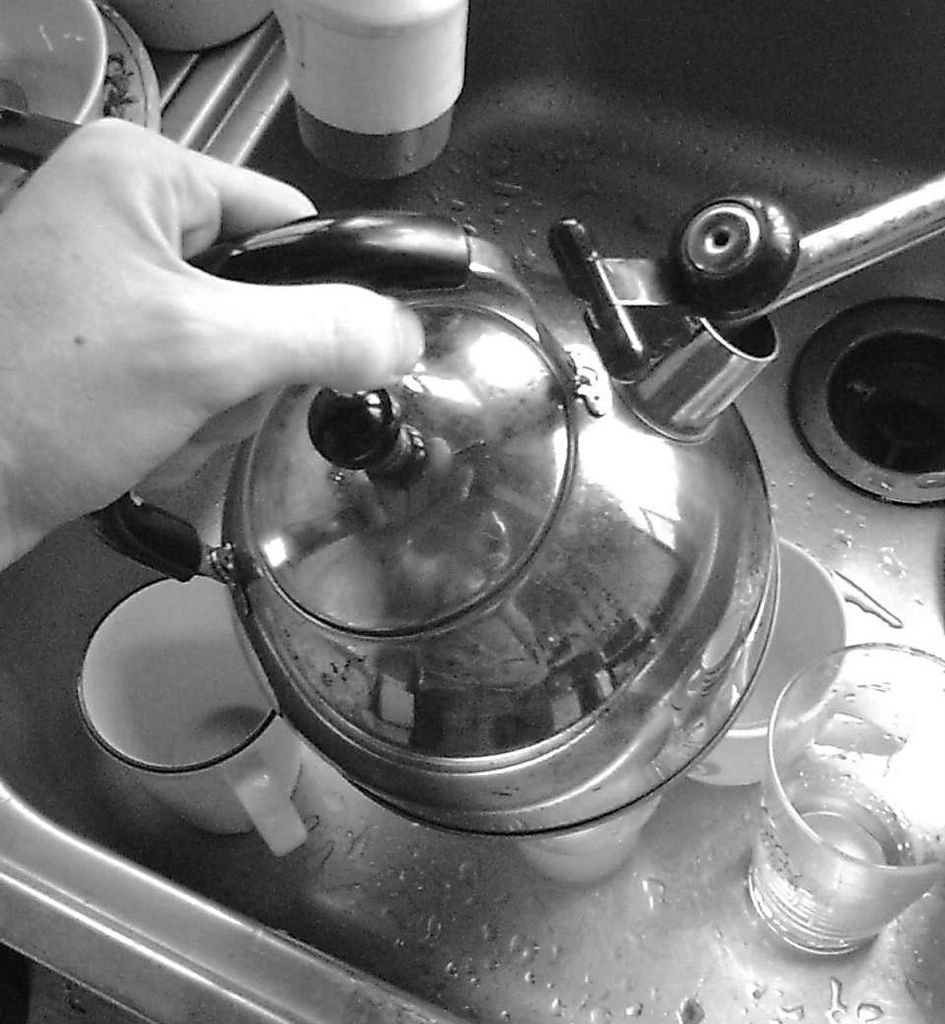
fig. 2 - The preparation begins: the hot water container (or "kettle" to give it its ceremonial title) should be filled through the spout rather than "faffing about" by taking off the lid. In fact, some masters of the English Tea Ceremony have NEVER taken the lid off their "kettle". Not even to clean it.

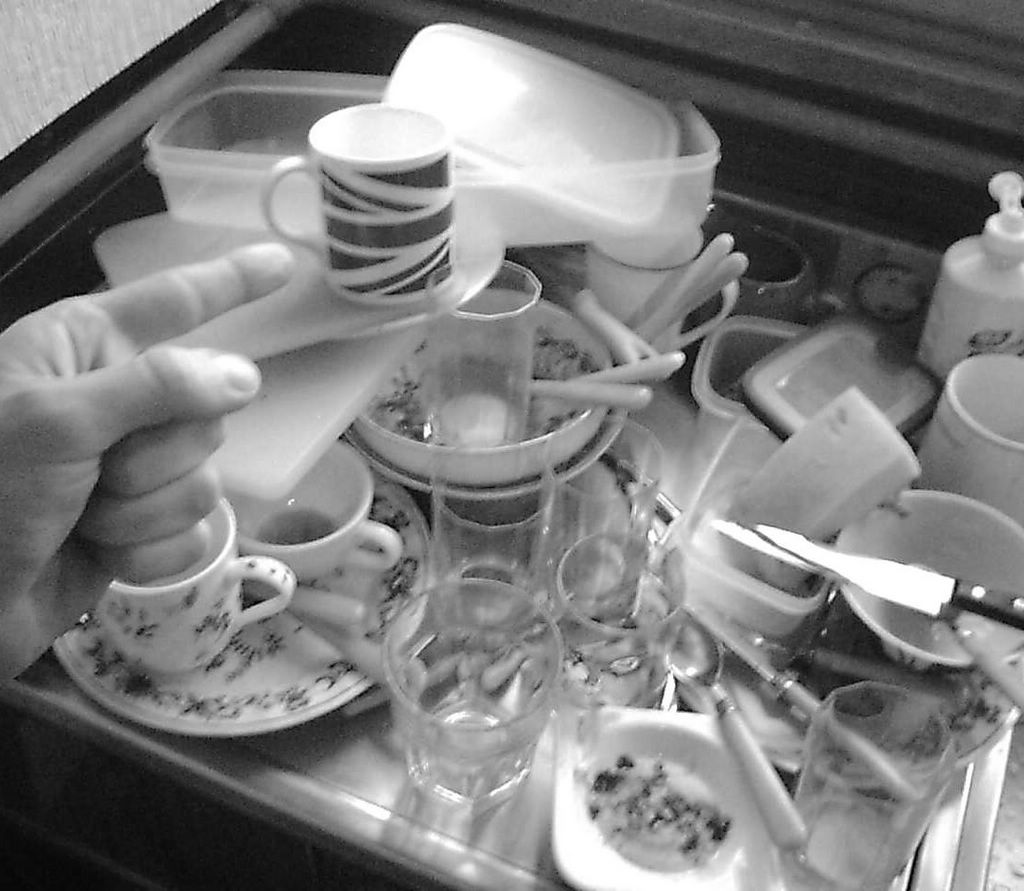
fig. 3 - Now the English tea student begins what some think may be the most challenging part of the English Tea Ceremony: rummaging through the mountains of washing up to find a clean tea receptacle, or "mug". Upon finding a suitable "mug" the tea student will give it a cursory "rinse under the tap". This part of the ceremony is purely for show and serves little hygienic purpose. Indeed, the interior of a "mug" in the possession of a true tea master will often contain several decorative - and permanent - sacred brown tea rings.

fig. 4 - The tea ceremony instruments are assembled. The choice of tea is all important here: we recommend "PG Tips", "Tetley" or "Ty-phoo". Airy-fairy herbal teas have no place in the English Tea Ceremony. Note also the all important carton of milk, a key part of the ceremony. I have heard rumours that in some parts of the world they sully the waters of tea with the juice of a lemon. The English tea drinker would never fall prey to such perversion.
NB. Some people say that Earl Grey should not be drunk with milk. These people are probably foreign and should be ignored.

fig. 5 - Lightning fast reactions are required here. At the very point of boiling the English tea student must deftly snatch the "kettle" from the stove and pour the scalding water over the tea bag. If the water is allowed to fall below boiling point the proper infusion of the tea into the water will fail to take place. Immediately afterwards, the tea student grasps the ceremonial stirring implement, or "teaspoon", and executes a deft back and forth manoeuvre of the tea bag, accompanied by the sacred words: "one elephant, two elephant, three elephant, four elephant, five elephant". Upon reaching five elephants, the tea bag is artfully squeezed against the wall of the "mug" to drain its last juices, and is subsequently catapulted in the vague direction of the bin.

fig. 6 - Milk and sugar can now be added. Note that some practitioners of the English Tea Ceremony choose to pour the milk into the "mug" before pouring in the water. The Great Milk Debate has been raging for centuries and shows no signs of abating. In fact, a dispute between the House of Tudor and the House of Stuart over whether to add the milk first or last was a major cause of the famous "War of the Roses". Under King Henry VIII, adding the milk last was outlawed as heresy, punishable by burning at the stake, and for many years the oldest and wisest of Britain's tea masters were forced to practice their forbidden art in secret.
Nowadays of course British society is a lot more tolerant of such cultural diversity, but even so the debate still permeates every level of government. Recently, Prime Minister Tony Blair was forced to eject the Honourable Ken Livingstone MP from the Labour Party, under what he cited as "unsolvable milk differences".

fig. 7 - The tea is now ready to be consumed. Upon taking the first sip of tea, the correct etiquette is to lean back, close one's eyes and utter a satisfied and protracted "Aaaaaahhhh..." Enjoy your tea making!

GOD SAVE THE QUEEN.

05 July 2005

10,000 and counting...

I've just checked my blog and noticed that the counter has reached 10,026 hits, so I thought I'd take the time to thank everyone who's been reading my nonsense for the past few months. It's been an honour and a privilege. Thank you!!!

Blimey, over 10,000 hits, eh? That's a helluva lot... for a start it's more than the population of Asahi (which is about 9,000 people). Of course, the irony is that probably no-one else in Asahi has actually checked my blog ( except my fellow Asahi gaijin Phoenix of course. Hello Phoenix!).

Thanks to everyone who's taken the time to leave a comment on my blog, it's always great to hear what you think, and I also want to say a big hello to my first celebrity stalker, Lydia, who was the first (and so far only) person to recognise me in public after reading my website. Hello Lydia!!!
 
Blimey, this is turning into a Gwyneth Paltrow-style Oscar acceptance speech. I'd better stop. Take care everyone.
 
Love Lew.

01 July 2005

MasaManiA

I've just stumbled across an absolutely fantastic website about Japan - MasaManiA.

How to describe it? Well, it's a photoblog run by an ex-Japanese porn director who takes random photos on the streets of Tokyo in a quest for the truth. In his own words: "Japanese culture report by MasaManiA with f**king photo & poor English you never seen at boring CNN, Time or major sophisticated jurnalism. I don't know what is good, bad, right or wrong, but I certainly know there is the truth ! and I also know it must be F**K ! I'm not moralist. but wana be mania of the truth. MasaManiA means that. this is my philosophy."

If that's not enough to make you click on the link, then I don't know what is. Beware though, there's liberal nudity and swearing, so if you labour beneath the curse of an internet nanny you may be out of luck.

I particularly liked his take on the Japanese phenomenon of flashing the "peace" sign every time a J-boy or girl has a camera shoved in their face. See "No more piece (sic), More F**K!".

Genius.